TESA and TESE Surgical Sperm Retrieval in Tbilisi, Georgia
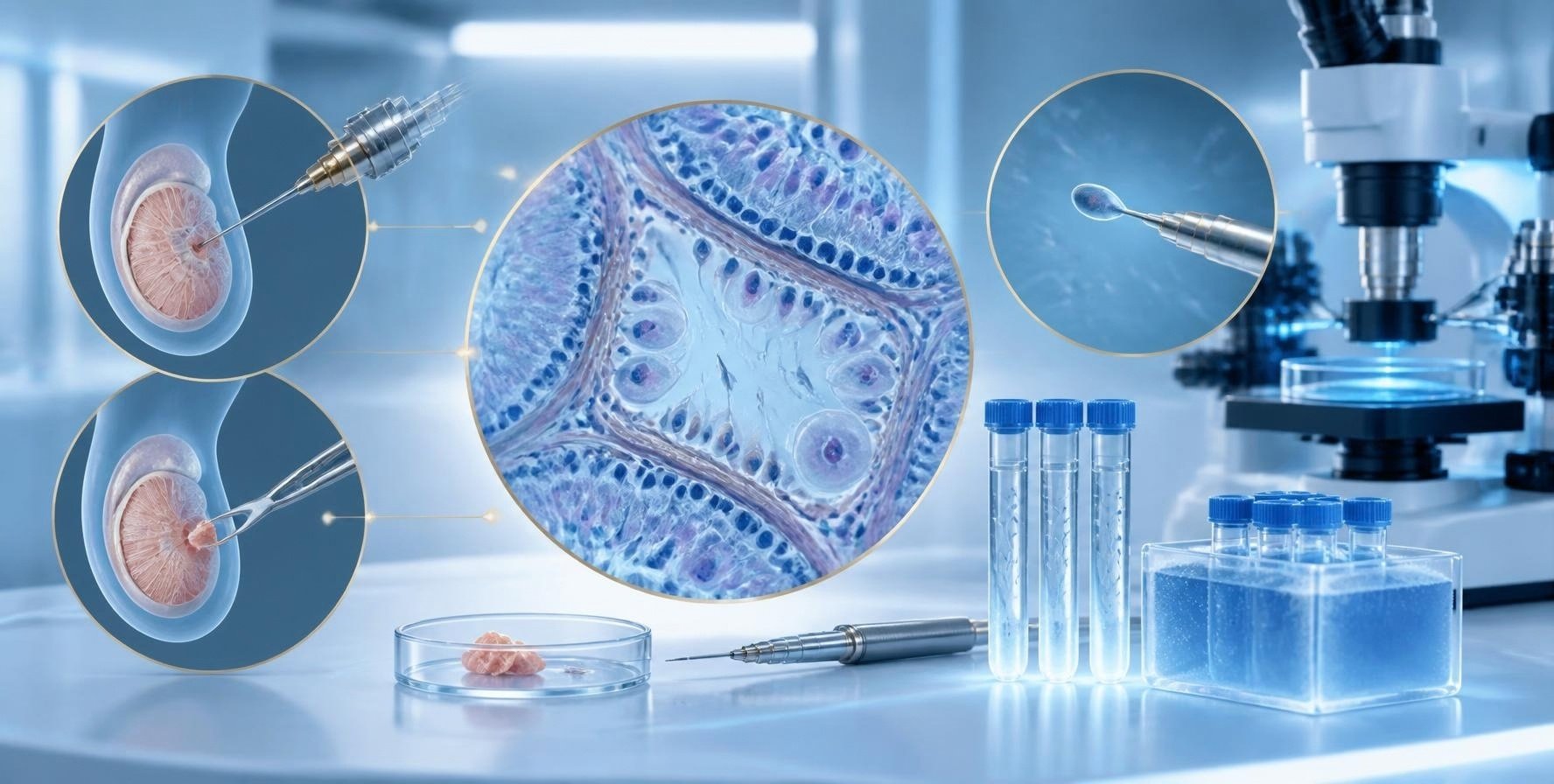
At Clinic Atlas in Tbilisi, we assess patients with azoospermia and coordinate surgical sperm retrieval where appropriate. Our urology and fertility teams review the underlying cause before recommending a procedure.Sperm may sometimes be found within the testes even when none are identified in the semen. However, successful retrieval is not guaranteed and does not automatically result in a pregnancy.
What Is Surgical Sperm Retrieval?
Collecting Sperm for Fertility Treatment
Surgical sperm retrieval involves obtaining sperm directly from the testis or, in certain circumstances, the epididymis.The aim is to identify sperm that may be suitable for fertility treatment, usually IVF with ICSI. The most appropriate approach depends on why sperm are absent from the semen.
Understanding Azoospermia
Azoospermia means that no sperm are identified in an appropriately examined semen sample.The diagnosis requires proper laboratory assessment and confirmation. The appearance or volume of semen cannot establish whether sperm are present.
What Is the Difference Between TESA, TESE and Micro TESE?
TESA Testicular Sperm Aspiration
TESA uses a fine needle to collect material from the testis. The sample is examined in the laboratory for sperm.It may be appropriate for selected patients with obstructive azoospermia, where sperm production continues but a blockage prevents sperm from reaching the semen.
TESE Testicular Sperm Extraction
TESE involves collecting a small sample of testicular tissue through an incision.The embryology team examines the tissue to identify sperm that may be suitable for use.
Micro TESE Microsurgical Testicular Sperm Extraction
Micro TESE uses an operating microscope to examine testicular tissue and select tubules that may contain sperm.It is generally the recommended surgical approach for patients with confirmed non obstructive azoospermia when retrieval is appropriate.
Is Micro TESE Guaranteed to Find Sperm?
No. Microscopic examination helps guide the search, but it cannot create sperm where none are present.The procedure also remains surgery, with potential complications even when tissue removal is carefully controlled.
Why Does the Cause of Azoospermia Matter?
Obstructive Azoospermia
In obstructive azoospermia, sperm are produced but cannot pass normally into the semen.Possible causes include a previous vasectomy or a congenital absence of the vas deferens. Depending on the diagnosis, testicular or epididymal retrieval may be considered.
Non Obstructive Azoospermia
In non obstructive azoospermia, sperm production is severely impaired. Small areas of production may still exist within the testes.TESA is not generally the recommended approach for this condition. We discuss micro TESE where the specialist assessment supports proceeding.
Alternatives to Retrieval in Selected Cases
For some forms of obstruction, reconstructive surgery may be an alternative.Certain hormonal conditions also require specific medical management. We assess these possibilities rather than assume every patient needs immediate retrieval surgery.
How Do We Assess You Before Treatment?
Medical History and Examination
We review previous semen analyses, operations and relevant medical history. A physical examination and additional investigations may help clarify the cause.If you have undergone sperm retrieval before, the surgical and laboratory reports are particularly useful.
Hormonal and Genetic Investigations
Hormone tests and appropriate genetic investigations may be recommended according to your findings.These can include chromosome analysis or Y chromosome microdeletion testing where indicated. Other genetic tests may be relevant to particular causes of obstruction.
Can Genetic Findings Change the Recommendation?
Yes. Certain genetic findings make successful sperm retrieval extremely unlikely and may lead a specialist to advise against surgery.Genetic counseling also helps explain whether an identified condition could affect future children.
Planning Alongside the IVF Cycle
We discuss whether retrieval should take place before egg collection or be coordinated with the treatment cycle.This plan should include what happens if no suitable sperm are identified.
What Happens During the Procedure?
Anesthesia and Tissue Collection
The anesthesia plan depends on the procedure and your medical circumstances. Your surgeon explains preparation, expected duration and recovery before consent.The collected material is examined by the embryology laboratory.
Assessing the Retrieved Sperm
Finding a sperm cell is not the same as confirming that a sufficient usable sample is available.The laboratory assesses the findings and explains whether sperm can be used immediately or considered for freezing.
Using Sperm with ICSI
Surgically retrieved sperm are usually used with ICSI, in which a sperm is injected into a mature egg.You can learn more about the subsequent treatment on our IVF and ICSI page.
Can Retrieved Sperm Be Frozen?
Preserving a Suitable Sample
Where appropriate, retrieved sperm may be frozen for later treatment.A stored sample may reduce the need for another retrieval, but this depends on the amount available and survival after warming.
Understanding the Limits of Storage
Not every retrieved sample is suitable for freezing or sufficient for several treatment attempts.We explain the relevant options and storage arrangements. Further information is available on our sperm freezing page.
What Should You Know About Recovery and Risks?
Individual Recovery Instructions
Discomfort, swelling or bruising may occur after surgery. Recovery time varies with the procedure and individual circumstances.We provide instructions about activity, wound care and when to contact the clinical team.
Possible Complications
Bleeding, infection and injury to testicular tissue are possible. Some patients may also experience a reduction in testosterone levels.Micro TESE aims to guide tissue sampling carefully, but it does not eliminate these risks.
What Are the Chances of Success?
Sperm Retrieval and Pregnancy Are Different Outcomes
The likelihood of finding sperm depends on the underlying condition and individual findings.If sperm are retrieved, fertilization, embryo development and implantation remain separate stages. A successful retrieval does not guarantee a baby.
When No Sperm Are Found
We review the findings and discuss whether further assessment is justified. Another operation is not automatically beneficial.Donor sperm or other reproductive decisions may also be discussed without pressure. Counseling can help you consider the available options.
Discuss Surgical Sperm Retrieval with Clinic Atlas
Contact Clinic Atlas in Tbilisi, Georgia, to discuss TESA, TESE or micro TESE and the assessment relevant to your circumstances.Before making fixed travel arrangements, ask our team about the records required, the proposed schedule and what your quotation includes.