Frozen Embryo Transfer in Tbilisi Georgia IVF Hospital
Frozen Embryo Transfer in Tbilisi Georgia IVF Hospital
Frozen embryo transfer, often shortened to FET, has become one of the most widely used steps in modern fertility treatment. At our IVF clinic in Tbilisi, Georgia, patients can use embryos that were created in an earlier cycle, frozen through vitrification, and transferred at a time that suits both the patient and the uterus. Whether you are comparing an IVF center, an IVF hospital, or a specialist clinic, understanding how FET works helps you plan with confidence.
What Frozen Embryo Transfer Means
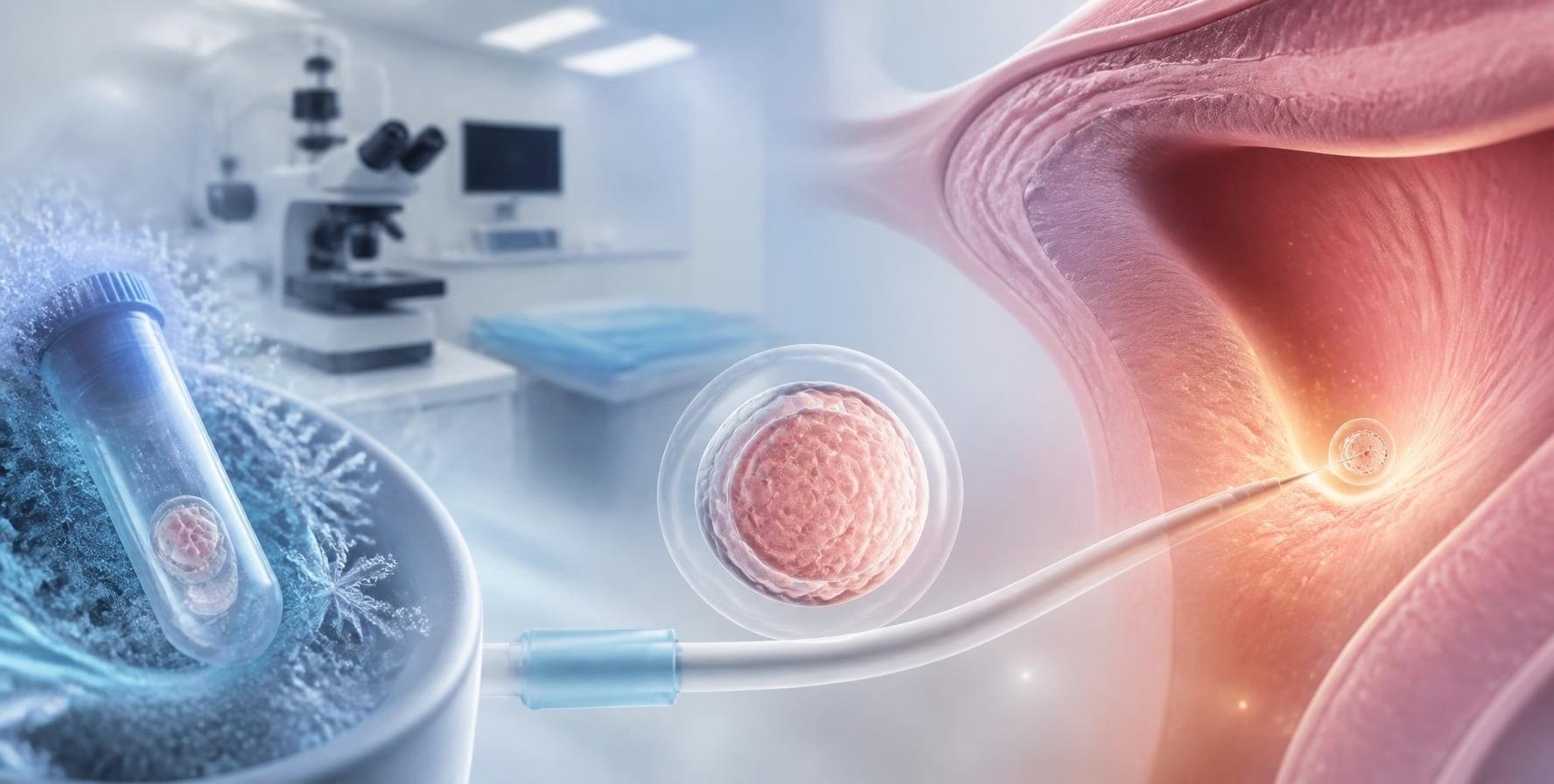
In a frozen embryo transfer, an embryo that was previously cultured and preserved at very low temperature is thawed and placed into the uterus. Vitrification, the rapid freezing method used in our laboratory, protects embryos from ice crystal damage, and most good quality embryos survive thawing well.
Why Patients Choose FET
There are several practical and medical reasons for choosing a frozen transfer. Some patients have embryos sent for genetic testing, and results take several days, so transfer happens in a later cycle. Others are advised to delay transfer after ovarian stimulation, for example when there is a risk of ovarian hyperstimulation. A frozen cycle also gives the team time to prepare the uterine lining carefully, and it allows leftover embryos from a fresh cycle to be used without repeating egg retrieval. FET is also common in donor egg programs and surrogacy arrangements, where timing between several people needs coordination.
How the Cycle Is Prepared
Preparation focuses on the uterine lining. Depending on your history, your specialist may recommend a natural cycle, a modified natural cycle with a trigger injection, or a medicated cycle in which estrogen and progesterone are used to build and support the lining. Ultrasound scans and, when needed, blood tests confirm that the lining is ready before a transfer date is set.
The Transfer Day
On the day of transfer, the embryologist thaws the chosen embryo and checks that it has survived and resumed development. The embryo is then loaded into a thin catheter and placed into the uterus under ultrasound guidance. The procedure is brief, does not need anesthesia, and most patients return to normal daily activity soon afterward. About 9 to 12 days later, a blood test measuring beta hCG shows whether pregnancy has begun, and a later ultrasound confirms how the pregnancy is progressing.
What Affects Success
Outcomes depend on embryo quality, the age of the person who provided the eggs, uterine receptivity, and the way the cycle was prepared. Genetic testing of embryos before freezing can help select chromosomally normal embryos, though it is not right for every patient. Your specialist will explain realistic expectations based on your own history rather than a general figure.
Safety and Planning
FET is considered a safe and routine procedure. Because the transfer is separated from stimulation, many patients find the process calmer and easier to schedule around work and travel. For patients traveling to Georgia, our international team helps with appointment planning, medication schedules, and coordination with your doctor at home.
Speak With Our Team
If you have frozen embryos or expect to have them after an IVF cycle, our team at our Tbilisi IVF clinic, center, and hospital is glad to review your situation and explain which FET protocol would suit you best.