Pregnant with Egg Donation in Tbilisi or Batumi Clinic
What Egg Donation Means for Future Mothers
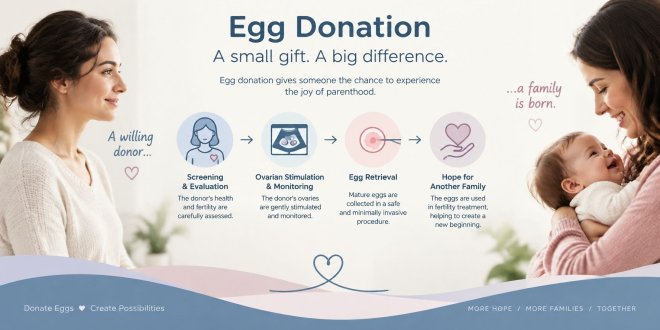
Egg donation is a fertility treatment in which a healthy young woman donates eggs that are fertilized in the laboratory and then transferred to the intended mother. It is a branch of in vitro fertilization, usually called IVF, and it has helped many thousands of families around the world complete their dream of parenthood. Because the eggs come from a donor in her twenties, the quality of the embryos is often higher than that of embryos created from the eggs of an older patient.
How Donor Eggs Create a Pregnancy
The donor takes hormone medication for around ten to twelve days so that several eggs mature at once. The eggs are collected in a short procedure under light sedation and combined with sperm from the partner or from a sperm donor. The resulting embryos grow in the laboratory for three to five days. While this happens, the recipient prepares her uterus with estrogen and progesterone, so the lining is ready to receive an embryo at exactly the right moment.
Who Benefits Most from Donor Eggs
Women with premature ovarian insufficiency, early menopause, very low ovarian reserve or poor egg quality are common candidates. So are women over forty who have had several unsuccessful cycles with their own eggs, women who have had their ovaries removed and those who carry a genetic condition they do not wish to pass on. Eligibility rules differ between clinics and change over time, so each patient should confirm with the clinic what applies to her own situation.
Is the Baby Genetically Related to the Mother?
When donor eggs are used, the baby is not genetically related to the intended mother, but she carries the pregnancy, gives birth and nourishes the baby for nine months. Scientists note that the uterine environment can influence how a baby's genes are expressed, which many women find deeply meaningful. Most importantly, parenthood is built through care, and families created through egg donation report strong and lasting bonds with their children.
Why Patients Choose Georgia for Egg Donation
Georgia has built a strong reputation in reproductive medicine over the last two decades. Patients arrive from Europe, the Middle East, Central Asia and beyond because the country combines modern medical practice with a welcoming approach to international guests. A trusted Georgia IVF center can often offer a complete journey, from the first online meeting to the final pregnancy scan.
Legal Framework and Patient Protection
Assisted reproduction is regulated by national legislation that recognizes the rights of intended parents and sets rules for donation. Donors give written consent and remain anonymous, and the intended parents are recognized as the legal parents of the child. Because laws can change, every patient should ask the clinic to explain the current rules in writing before starting treatment.
Large and Diverse Donor Pool
A well established clinic keeps a database of screened donors with varied physical characteristics such as height, hair color, eye color, blood group and skin tone. Recipients often receive a detailed profile and can ask for a match who resembles them or their partner. A wide pool also shortens the waiting time, because a suitable donor can usually be found within days or weeks rather than months.
Short Waiting Time and Personal Care
Many countries have long waiting lists for donor eggs, sometimes lasting years. In Georgia, most clinics can schedule a cycle within a few weeks of the first consultation. Patients usually have a personal coordinator who speaks their language, answers messages quickly and guides them through each stage, which reduces stress during a demanding period.
Affordable Treatment Compared with Many Countries
Treatment costs in Georgia are generally lower than in Western Europe, the United Kingdom and North America, while the standard of care remains high. Lower overhead and favorable exchange rates allow clinics to offer comprehensive packages. Affordable does not mean basic, and patients should still compare what each package includes before they decide.
Choosing a Georgia IVF Center, Clinic or Hospital
Not every clinic offers the same level of service, so careful research is essential. A good Georgia IVF center should be open about its methods, its results and its team, and it should welcome your questions rather than avoid them.
Qualifications of the Medical Team
Look for reproductive specialists and embryologists with years of experience in donor cycles, ongoing training and membership in professional societies. Ask how many egg donation cycles the clinic performs each year, since regular practice improves skill and consistency. A friendly doctor who explains your options clearly is a strong sign of quality.
Laboratory Standards and Technology
The laboratory is the heart of any IVF program. Modern incubators, time lapse imaging, careful air filtration and strict quality control all help embryos develop well. Ask whether the clinic offers blastocyst culture, vitrification for freezing embryos and preimplantation genetic testing when it is medically appropriate for you.
Transparent Packages and Communication
Reliable clinics provide written packages that list medication, donor compensation, laboratory work, transfer procedures and follow up care. They explain what happens if the first transfer is unsuccessful and whether discounts apply to later attempts. Clear and respectful communication before payment usually continues after it, and that makes the whole experience calmer.
Questions to Ask Before You Book
Useful questions include how many embryos are usually transferred, how the donor is selected, what the pregnancy rate is for recipients of your age and how the lining is prepared. Ask whether a hospital with an operating theatre and emergency care is available on site or nearby.
Egg Donation Treatment in Tbilisi
Tbilisi, the capital, is the center of fertility care in the country, and most international patients start their journey here. The city blends old world charm with modern private medicine, which makes a stay both comfortable and reassuring.
Why Tbilisi Is the Main Hub
The capital hosts many of the best known fertility clinics, private hospitals and diagnostic laboratories. Specialists are concentrated here, which means shorter referral times for additional tests such as hysteroscopy or thyroid evaluation. International airport connections to many European and Asian cities make arrival simple, even for patients who travel on short notice.
Hospital Facilities and Support Services
Many private clinics in Tbilisi operate within or beside a hospital, so egg retrieval, anesthesia and any unexpected medical need can be handled safely under one roof. Staff often speak English, Russian and Turkish, and interpreters are available for other languages. Airport pickup, transfers and appointment reminders are common services for visiting patients.
Staying in the City During Treatment
Recipients usually spend about seven to ten days in Tbilisi around the embryo transfer, while the donor follows her own schedule. Hotels and apartments near the clinic make daily visits comfortable. Between appointments you can walk through the old town and enjoy Georgian cuisine.
Egg Donation Treatment in Batumi
Batumi lies on the Black Sea coast and attracts patients who prefer a quieter setting.
A Seaside Option for Patients
Batumi offers a mild climate, a long promenade, green parks and modern hotels, which can help lower stress levels before and after the transfer. For patients who dislike big city noise, this relaxed resort town can be an attractive base for the days of treatment.
Clinic Access and Travel Routes
A fertility clinic or hospital in Batumi can provide many of the same services as those in the capital, including consultation, ultrasound monitoring and embryo transfer. Some patients complete early testing at home, fly to Batumi directly where flights are available or connect through Tbilisi. Ask the clinic which stages are performed locally and which may require a visit to the capital.
Combining Treatment with Rest
Relaxation matters, although it does not replace medical care. Gentle walks by the sea, light meals, good sleep and time away from work can make the days around the transfer more comfortable.
The Egg Donation Process Step by Step
Understanding each stage helps you feel prepared and in control. Although every clinic has its own protocol, the main steps are similar and follow a clear order.
Initial Consultation and Medical Review
Treatment begins with a review of your medical history, previous cycles, hormone tests, ultrasound findings and any reports from your home doctor. Many clinics hold the first meeting online. Tests for infectious diseases, thyroid function, blood count and uterine health are usually requested. If the uterus has polyps, fibroids or scarring, these are treated before the cycle starts.
Choosing and Matching the Donor
The clinic proposes donors who match your preferences for appearance and blood group. You receive non identifying information, such as age, education, physical features and health history. Once you approve a profile, the donor begins stimulation and the schedules of both women are synchronized so that the timing works for the transfer.
Preparing the Uterine Lining
You take estrogen, usually as tablets or patches, to thicken the lining, and ultrasound scans check its progress. When it reaches a suitable thickness and pattern, progesterone is added to prepare the womb for implantation. The schedule is precise, so follow your instructions closely and report any bleeding or discomfort to the clinic.
Fertilization and Embryo Culture
After egg retrieval, the embryologist fertilizes the eggs with sperm, often by ICSI, in which one sperm is injected into each mature egg. The embryos are observed daily. Many clinics aim for day five blastocysts, since these often have a better chance of implanting. Extra good quality embryos can be frozen for later use.
Embryo Transfer Day
Transfer is a brief and generally painless procedure. A soft catheter places the embryo into the uterus under ultrasound guidance, and you can rest for a short while before leaving. A comfortably full bladder is often requested. Most patients feel relaxed and hopeful, and many describe this as the most emotional moment of the entire journey.
The Two Week Wait and Pregnancy Test
About ten to fourteen days after transfer, a blood test measures the pregnancy hormone hCG. Until then, continue your medication, avoid heavy lifting and be patient with yourself. Early home tests can give misleading results, so wait for the date given by the clinic. If the result is positive, a first ultrasound is scheduled a couple of weeks later.
Donor Screening and Safety
Safety protects both the donor and the recipient, and it is one of the most important reasons to choose a licensed Georgia IVF center. Ethical practice means careful testing, honest information and respect for everyone involved.
Medical and Genetic Testing
Donors undergo blood tests, infectious disease screening, ovarian reserve assessment, a gynecological examination and a review of their family history. Many clinics also perform carrier screening for common genetic conditions. Strict age limits, usually between twenty and thirty years, help ensure that eggs are of good quality.
Psychological Evaluation
A responsible clinic assesses the donor's motivation and emotional readiness. She must understand the process, the medication and the legal consequences of donation. Voluntary participation, fair compensation and respect for her health are basic principles of ethical practice.
Anonymity and Consent
Donation in Georgia is anonymous. The donor does not become a parent in any legal sense, and the intended parents hold full rights. Written agreements are signed before treatment starts, and confidentiality protects the privacy of everyone involved.
Success Rates and What Influences Them
Success rates are not identical for every patient, and honest clinics avoid promising a guaranteed result. Still, donor egg cycles generally show higher pregnancy rates than cycles that use the eggs of older women, because the donor's eggs are young and healthy.
Embryo Quality and Genetic Testing
Embryo grade, development speed and chromosome health all affect implantation. Preimplantation genetic testing can identify chromosomally normal embryos, though it is optional and not necessary for every recipient. Discuss with your doctor whether it adds value in your case.
Uterine Health and Age
Even with young eggs, the uterus must be receptive. Conditions such as a thin lining, adenomyosis, fibroids, polyps and chronic inflammation can reduce chances and should be treated beforehand. Age also matters for pregnancy safety, so a medical check of heart function, blood pressure and blood sugar is wise for women over forty five.
Lifestyle Factors
Smoking, heavy caffeine intake, alcohol, obesity and poorly controlled diabetes can lower success. A balanced diet, regular gentle exercise, adequate sleep and stress management support a healthy cycle. Small changes made weeks before treatment often bring real benefits.
Costs, Packages and Budget Planning
Cost is a major concern for most families, and Georgia attracts many patients for this reason. Prices differ from one clinic to another, so request a detailed written offer rather than relying on a general figure.
What a Standard Package Includes
A typical package covers the initial consultation, donor selection and compensation, donor stimulation medication, egg retrieval, laboratory work, fertilization, embryo culture, monitoring of your lining preparation and one embryo transfer. Some packages also include accommodation or transfers. Always request the list in writing.
Extra Costs to Expect
Possible additional costs include your own medication, genetic testing, embryo freezing, extra transfers, special laboratory techniques, hysteroscopy and prenatal tests. Knowing these in advance helps you avoid surprises and plan a realistic budget.
Travel and Accommodation Planning
Flights, hotel stays, local transport, meals and possible extra days should be included in your budget. Booking refundable tickets is wise because the timing of the cycle can shift by a few days. Many patients travel with a partner, relative or friend for emotional support.
Preparing Emotionally and Physically
Fertility treatment is both a medical and an emotional journey. Preparing your body and mind can make the experience smoother and help you stay positive.
Health Habits Before Treatment
Take folic acid as advised, keep vaccinations current, treat any infections and review your regular medications with the doctor. Maintain a healthy weight, stay active and limit alcohol and tobacco. A pre treatment check with your own physician is also helpful.
Emotional Support for Intended Mothers
Using donor eggs can bring mixed feelings, including grief about not using your own eggs and excitement about finally becoming a mother. Both are normal. Talk with your partner, join a support group or speak with a counselor who understands fertility care. Many clinics offer psychological support.
Talking to a Child About Donor Conception
Experts in family psychology often recommend telling children about their origins in a warm and age appropriate way from an early age. Simple honest stories, shared with love, help children feel secure. The decision is personal, and you can seek guidance from a counselor to find words that suit your family.
Life After a Positive Test
A positive result is a joyful moment, and it also begins a new phase of careful follow up. Your clinic will guide you through the first weeks.
Early Monitoring
Your doctor will check hCG levels and perform an ultrasound at about six to seven weeks to confirm the heartbeat. You will continue progesterone and estrogen for several weeks as directed. Do not stop medication on your own.
Returning Home for Prenatal Care
After the first scans, most patients return home and continue pregnancy care with a local obstetrician. Bring a full report from the Georgia clinic, including the cycle details, so your doctor understands the donor egg pregnancy. Pregnancies from egg donation can carry slightly higher risks, such as high blood pressure, so regular monitoring is important.
Frequently Asked Questions About Egg Donation in Georgia
How Long Does the Whole Process Take?
From the first consultation to the pregnancy test, the process usually takes four to eight weeks. The stay in Georgia is often about one week, depending on the protocol of the clinic.
Is Egg Donation Painful for the Recipient?
The recipient takes tablets, patches or injections and has ultrasound scans. The transfer causes little or no pain. Mild bloating and mood changes can occur because of the hormones.
Can I Choose the Donor?
You cannot meet or identify the donor, but you can select the characteristics you prefer, and the clinic will propose suitable matches for your approval.
What Is the Age Limit for Recipients?
Age limits vary by clinic and by medical condition. Many clinics evaluate each woman individually, considering heart health, blood pressure and uterine condition rather than age alone.
Final Thoughts on Becoming Pregnant with Egg Donation
Becoming pregnant with egg donation can turn a long and painful struggle into a hopeful path toward family. Georgia offers a combination of experienced doctors, screened donors, short waiting times and fair prices, with strong options in both Tbilisi and Batumi. The best results come from choosing a trustworthy Georgia IVF center, asking detailed questions, understanding every step and caring for your body and emotions along the way. Take your time, request everything in writing and speak openly with the medical team. With the right clinic, honest guidance and patience, your dream of holding your baby can become real.